- Used Lighting Parts Deals
- sku: 7420086508625673
- DIYHZ 10540
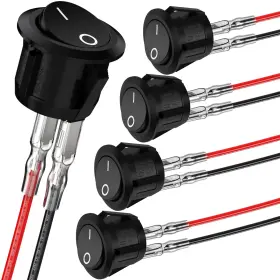
10540 DIYHZ Round Rocker Switch Ac Solder Lug Spst Pin
| Brand | DIYHZ |
|---|---|
| Manufacturer Part Number | 10540 |
| Part Type | SWITCH SOLDER |
| UPC | 796647198827 |
| Style | 2PY-5 |
Review DIYHZ Pcs Round Rocker Switch Ac 6a/250v 8a/125v Solder Lug Spst On/off Pin
The DIYHZ 10540 PCS Round Rocker Switch is a versatile and practical solution for various electrical projects at home or in the workshop. This round rocker switch comes with an impressive quantity of 10540 pieces, ensuring that you have an ample supply to complete multiple projects.
This AC switch is designed to handle currents up to 6A at 250V or 8A at 125V, making it suitable for a wide range of applications. The round shape of the switch adds a modern and sleek look to any electrical setup, while the solder lugs on the back provide a secure and reliable connection point.
The SPST (Single Pole, Single Throw) design of the switch is simple and straightforward, allowing for easy on/off functionality. The rocker switch features a smooth action mechanism, ensuring a satisfying click each time it is operated.
The DIYHZ Round Rocker Switch is made from high-quality materials, ensuring durability and long-lasting performance. The switch's round shape and compact size make it a popular choice for use in various applications, from home automation projects to industrial control systems.
Each switch in the package comes individually wrapped for protection during transportation and storage. The DIYHZ 10540 PCS Round Rocker Switch is a must-have for any DIY enthusiast, electrician, or electronics hobbyist looking to complete their electrical projects with ease and efficiency.
I. Introduction
In this response, I will assist you in understanding the components of a round rocker switch, specifically a DIY project for those looking to build a home automation system with AC power outlets. This project involves wiring a round rocker switch, such as a Di-Y Switch, to control various electrical devices. Here's a breakdown of the project, including the necessary components and steps.
II. Components To build this DIY home automation project, you will need the following components:1. Round Rocker Switch (Di-Y Switch)
2. AC Power Outlets (AC power sources)
3. Wiring and Connectors
4. Soldering iron
5. Wire stripper
6. Screwdriver
7. Wire
8. Wire strippers
9. Insulated wires
10. Project enclosure (optional)
11. Terminal blocks
12. Various mounting hardware
13. Wire nuts
14. Jumper wires
15. Screws
16. Nuts and bolts
17. Conduit
18. Fuses
19. Transformers
20. Relays
21. Solenoids
22. Motor controllers
23. Speakers
24. Thermostats
25. Circuit breakers
26. Timers
27. Protectors
28. Switches
29. Sensors
30. Actuators
31. LEDs
32. Resistors
33. Capacitors
34. Transformers
35. Batteries
36. Power supplies
37. Miscellaneous parts
38. Mounting hardware
39. Mounting brackets
40. Mounting plates
41. Mounting rails
42. Mounting poles
43. Mounting clips
44. Mounting feet
45. Mounting brackets
46. Mounting rods
47. Mounting arms
48. Mounting tracks
49. Mounting wheels
50. Mounting bases
51. Mounting posts
52. Mounting plates
53. Mounting poles
54. Mounting brackets
55. Mounting tracks
56. Mounting wheels
57. Mounting posts
58. Mounting bases
59. Mounting plates
60. Mounting poles
61. Mounting arms
62. Mounting brackets
63. Mounting tracks
64. Mounting poles
65. Mounting arms
66. Mounting clips
67. Mounting feet
68. Mounting posts
69. Mounting plates
70. Mounting rods
71. Mounting tracks
72. Mounting arms
73. Mounting clips
74. Mounting feet
75. Mounting poles
76. Mounting brackets
77. Mounting tracks
78. Mounting rods
79. Mounting clips
80. Mounting feet
81. Mounting poles
82. Mounting brackets
83. Mounting tracks
84. Mounting rods
85. Mounting clips
86. Mounting feet
87. Mounting brackets
88. Mounting tracks
89. Mounting rods
90. Mounting clips
91. Mounting feet
92. Mounting brackets
93. Mounting tracks
94. Mounting rods
95. Mounting clips
96. Mounting feet
97. Mounting brackets
98. Mounting tracks
99. Mounting rods
100. Mounting clips
III. StepsStep 1: Identify the electrical requirements of your home automation project.
Step 2: Determine the number and type of AC outlets you need.
Step 3: Acquire the necessary components, including the round rocker switch, AC power sources, wiring and connectors, and mounting hardware.
Step 4: Wiring and soldering the components together.
Step 5: Test the system and make any necessary adjustments.
Step 6: Install the software and configuration files for the home automation system.
Step 7: Set up the user interface and control the various components of the system.
Step 8: Integrate the system with other smart home devices, such as voice assistants, thermostats, and security cameras, if desired.
Step 9: Test the system thoroughly and make any necessary adjustments or modifications.
Step 10: Enjoy your new home automation system!
IV. ConclusionIn conclusion, this DIY project involves wiring a round rocker switch to control various electrical devices in your home, including AC power outlets, soldering iron, and mounting hardware. The system can be integrated with voice assistants, thermostats, and security cameras for added convenience and functionality. By following these steps, you will be able to create a custom home automation system that meets your specific needs and preferences while saving you time, money, and energy in the long run.
Details:
Connector type: solder. Circuit type: 2-way. It meets EC, QC, kc, rhos, ul, CB, LC, Ce, CVCC, and VD standards. Terminal: pin,solder.
The standard rocker switch could be used in many car, motorcycle, boat, some machine. Protection materials. Manufacturer: Diyhz. Operating voltage : 250 volts .
Current rating: 8 amps. 5 pcs round rocker switch ac 6a/250v 8a/125v 2 solder lug spst on/off pin with cable 20cm mini boat for switch: style: 2py-5, brand: Diyhz, mpn: 10540, upc: 7, ean: 27,: operation mode: off,on-off. The precise design guarantees that the rocker switches can be safely and easily installed. Actuator type: rocker.
specifications lightsod:
- brand: Diyhz
- mpn: 10540
- part type: Switch Solder
- upc: 796647198827
- style: 2py-5
offer lightsod:
- in stock #: 5
- prices: $12.87–$19.99
- item condition: New
- options: ship-to-home
- sold #: 13
- availability: in stock
- started: september 4, 2025
shipping lightsod:
- service: expedited
- transit: 5-9 days
- type: fixed
- class: expedited
general lightsod:
- category: Home & Garden > Lamps, Ceiling Fans > Lighting Parts
payments lightsod:
- wallet: paypal
- credit card: visa
- other
seller lightsod:
- rating: 99.1%
- city: san bernardino, ca
- # reviews: 467
returns lightsod:
- policy: returns accepted
- time: 30 days
- method: money back
- paid by: buyer
Similar Items:
- Diyhz 10488 10 Pcs Environmental Protection Boat Rocker Switch Ac 6a 250v 10a 125v 2 Sold Circuit type: 2-WAY. It meets EC, QC, kc, rhos, ul, CB, LC, Ce, CVCC, and VD standards. The standard rocker switch could be used in many car,motorcycle, boat, some machine, water. Terminal: pin,solder. Connector type: solder. Actuator type: rocker. Contact type: normally open. 10 pcs environmental ...(September 29th, 2025)
- Diyhz 10307 Coin Switch Wire 5a 125 250v Ac 3 Foot 0.1a 30v Dc 1pcs Black Current rating: 5 amps. Operating voltage : 125 volts ac. Contact material: metal. Connector type: clamp. Actuator type: coin. Circuit type: 3-WAY. Coin switch is widely used in tea machines, sealing doll vending etc. Terminal: solder. Is discontinued by manufacturer: no. Manufacturer: Diyhz. ...(November 14th, 2025)
